A useful emergency stockpile starts with a clear count of people, days, and needs. Use this checklist to prepare for three days without normal electricity, shopping, or reliable communications.
Make 72 hours your first milestone. Florida recommends at least seven days of hurricane supplies. Build toward that goal as your budget allows, and follow evacuation instructions even when your pantry is stocked.
Start with your household numbers
People: _____ Pets: _____ Last checked: _____
CDC recommends at least one gallon of water per person per day. Add extra for pets, hot weather, illness, and other needs.
| People | Water for 3 days |
|---|---|
| 1 | 3 gallons minimum |
| 2 | 6 gallons minimum |
| 4 | 12 gallons minimum |
Your 72-hour stockpile checklist
1. Water
- ☐ Store the calculated amount in unopened commercial bottles or properly sanitized food-grade containers.
- ☐ Label home-filled containers and replace their water every six months; follow dates on commercial bottles.
- ☐ Store away from heat, sunlight, fuel, and chemicals. Follow local drinking-water advisories.
2. Food you can actually eat
- ☐ Write three breakfasts, lunches, and dinners using shelf-stable foods your household already eats.
- ☐ Count portions: four people eating three meals daily need 36 individual meal servings over three days, plus snacks.
- ☐ Include ready-to-eat beans, canned proteins, fruit, crackers, and suitable nut or seed butter; account for allergies and special diets.
- ☐ Pack a manual can opener, utensils, and pet food. Keep a no-cook option for every day.
Example no-cook menu: Scale portions to each person’s nutritional needs. Choose foods labeled ready to eat and use single-serving milk packs.
| Day | Breakfast | Lunch | Dinner |
|---|---|---|---|
| 1 | Granola and fruit | Beans and tortillas | Canned chicken, crackers, vegetables |
| 2 | Cereal and shelf-stable milk | Ready-to-eat lentils and crackers | Canned salmon, corn, fruit |
| 3 | Granola and applesauce | Seed-butter tortillas | Bean salad and crackers |
3. Light, power, and information
- ☐ Put a flashlight or headlamp where each person can find it. Test spare batteries.
- ☐ Charge power banks and include the correct cables.
- ☐ Check a battery-powered weather radio and local emergency alerts.
- ☐ Test smoke and carbon monoxide alarms. Run portable generators outdoors, at least 20 feet from doors, windows, and vents—never in a garage. Never use grills indoors.
4. Health, sanitation, and comfort
- ☐ Check first-aid supplies, prescription information, eyeglasses, and household care needs.
- ☐ Arrange medication reserves, temperature-sensitive storage, and medical-device backup with your pharmacist, clinician, or equipment provider.
- ☐ Gather soap, sanitizer, toilet paper, wipes, trash bags, menstrual products, diapers, and an approved sanitation plan if toilets cannot be used.
- ☐ Add sturdy shoes, weather-appropriate clothing, bedding, and simple activities for children.
5. Contacts, cash, and a way to leave
- ☐ Print family numbers, an out-of-area contact, and two meeting locations.
- ☐ Confirm school pickup and authorized-release procedures.
- ☐ Protect copies of essential documents; keep keys and small cash bills accessible.
- ☐ Identify your evacuation destination and routes. Plan transportation for people and pets.
Food-safety reminder: Keep refrigerator doors closed. Without power or another cold source, refrigerated perishables generally need discarding after four hours. Never taste food to decide whether it is safe.
Turn the list into a plan
Inventory before shopping. Buy the missing water, food, and essential supplies first. Give each gap an owner and completion date:
Missing item: __________ Quantity: _____
Owner: __________ Due: __________
Run a 20-minute tabletop drill: explain how you would find a light, prepare dinner, receive updates, contact family, and decide whether to leave. Keep utilities and medical equipment operating during practice. Review supplies twice yearly and after using them.
Questions about a 72-hour emergency stockpile
What should I buy first?
Inventory what you already own, then close gaps in water, ready-to-eat food, a manual can opener and accessible lighting. Add the household needs on the checklist before buying optional equipment. Use the grid-down preparedness checklists to organize the next stage.
How can I practice the plan without switching off the house?
Talk through an outage evening while keeping normal utilities and essential equipment operating. Ask each person to locate a light, explain the contact plan and choose a meal from the stored food. Record missing items and the person responsible for each correction.
Where can I find a longer power-outage plan?
Read the complete power-outage preparedness guide for a broader planning sequence. The preparedness books page connects the practical guides with related reading. School teams can also explore the campus preparedness resources for their organizational responsibilities.
Choose your next preparedness resource
Guided planning: The First 72 Hours course on Thinkific includes seven self-paced reading lessons, worksheets, and a family drill.
Family stockpiling: The 72 Hour Stockpile on Amazon (paid link) focuses on emergency preparedness and stockpiling food and water.
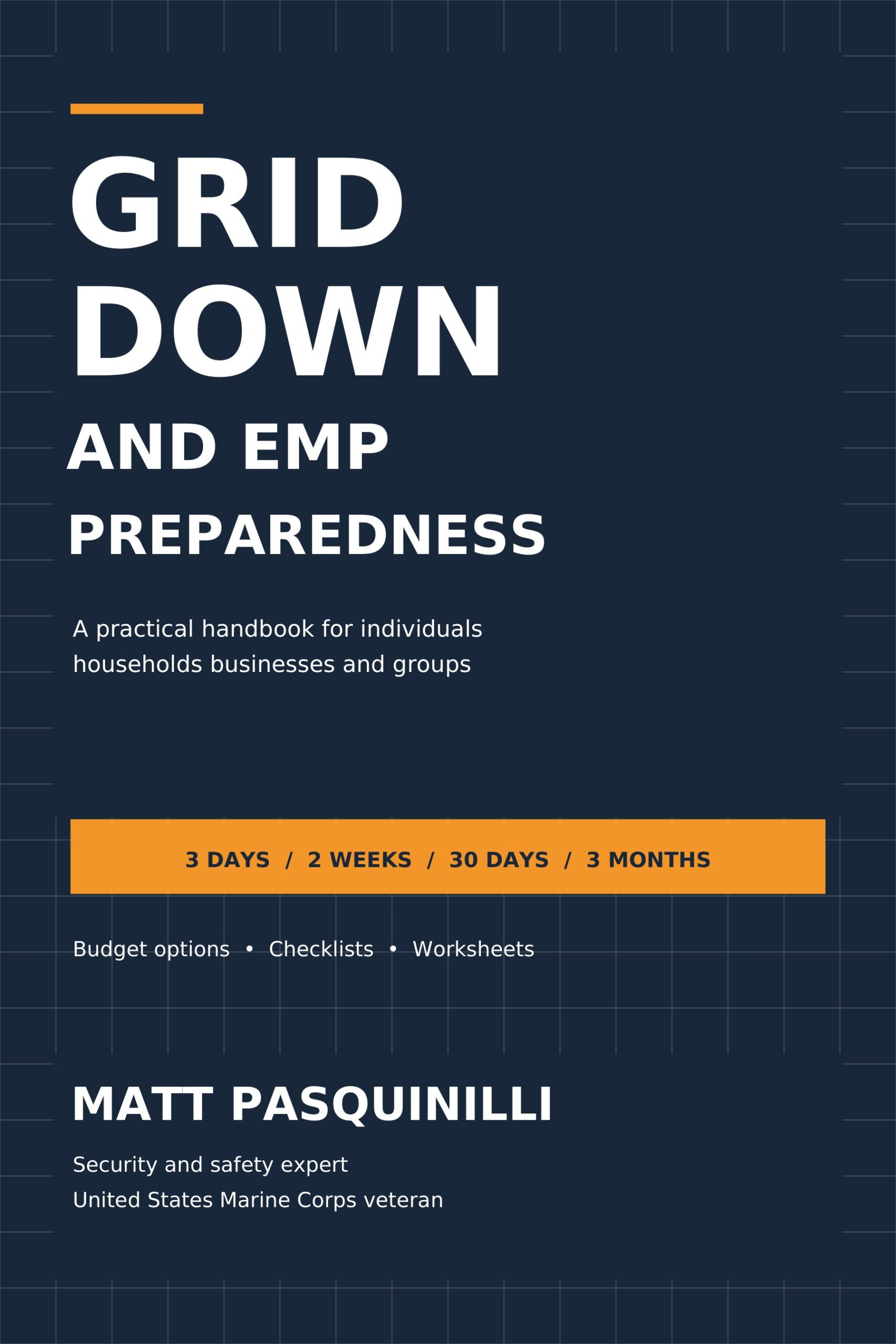
Longer outages: Grid Down and EMP Preparedness on Amazon (paid link) expands planning to households, businesses, and groups.
Choose the format you need. Amazon displays current formats, prices, and availability. As an Amazon Associate I earn from qualifying purchases.
Planning references: CDC emergency water storage; Florida hurricane supplies; CDC generator safety; CDC food safety during outages.
