Start with the question you want your next book to help you answer. Are you looking for a broad introduction to everyday personal safety, or a more focused introduction to learning with a cane?
My two self-defense guides approach those needs differently. Here is a straightforward way to choose your starting point without turning your reading list into another unfinished project.
Paid links: The Amazon links below are affiliate links. As an Amazon Associate I earn from qualifying purchases. Check Amazon for current formats, prices and availability.
For a broader everyday-safety focus

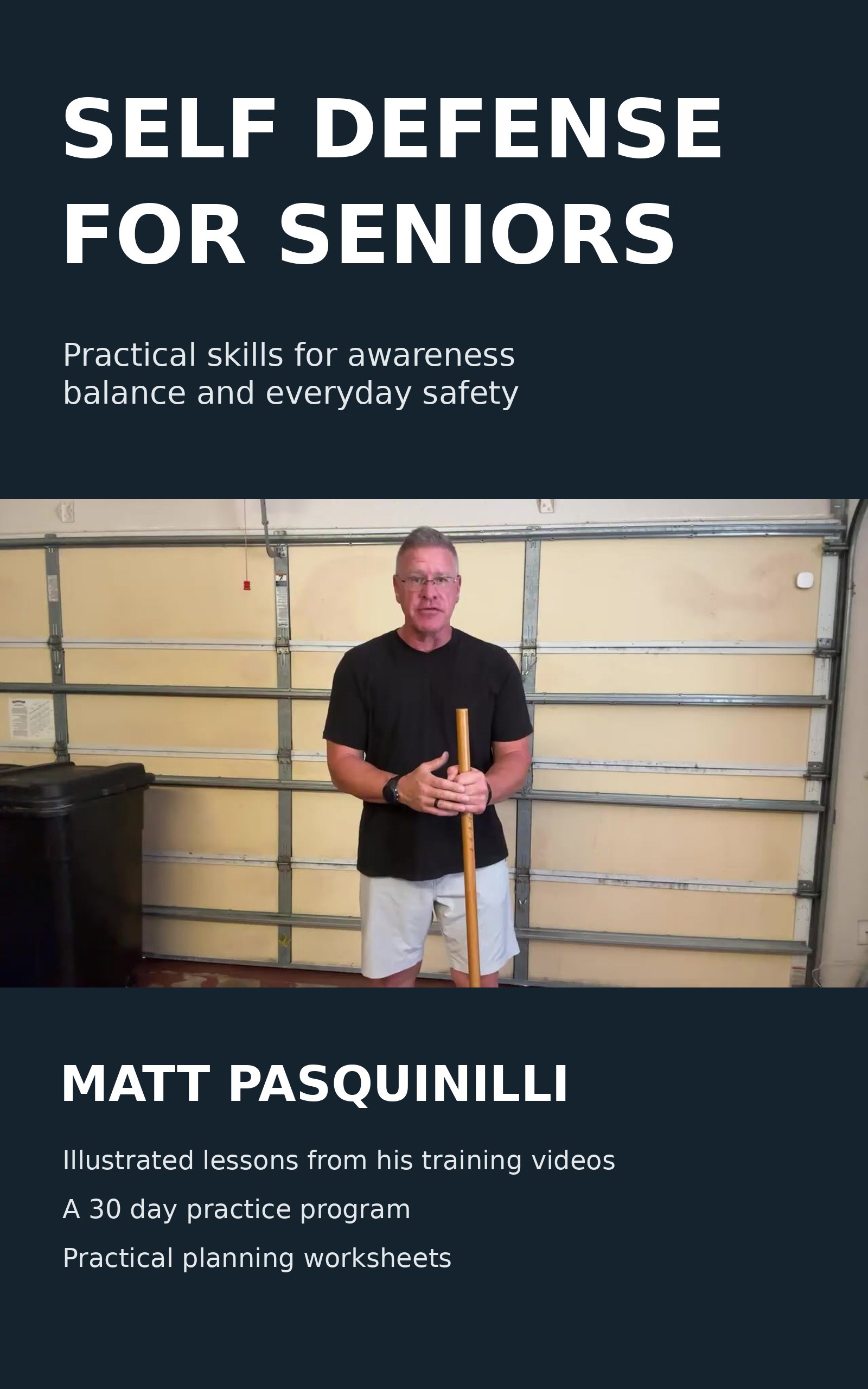
Self Defense For Seniors: Practical Skills for Awareness, Balance, and Everyday Safety focuses on awareness, boundaries, balance and practice adapted to your abilities. It includes illustrated material, planning prompts and a practice program.
Choose this starting point if your question is, “How can I organize the different parts of everyday personal safety?” You can use your reading to identify the topics you want to understand better before deciding what further instruction you need.
View Self Defense For Seniors on Amazon (paid link)
For a focused introduction to cane training

Practical Cane Self Defense: An Illustrated Guide for Older Adults and Beginners introduces awareness, cane handling, balanced movement and controlled practice. Its illustrated lessons draw on my instructional videos.
Choose this starting point if you want a book specifically organized around beginning cane training. Reading can help you become familiar with the vocabulary and identify questions to bring to an instructor. It does not replace supervised instruction or establish that a movement is suitable for you.
View Practical Cane Self Defense on Amazon (paid link)
Give your first reading session one purpose
You do not need to finish a book in one sitting. Choose a short section and write down three things:
- The idea: What is the section asking you to understand?
- The question: Which part needs clarification or individual guidance?
- The next reading: What section will you return to next?
Keep reading notes separate from claims about what you can do. Understanding a description and performing a skill reliably are different things. If a physical lesson is unfamiliar or unsuitable for your abilities, leave it as a question for qualified guidance rather than trying to force it.
Choose one book, then follow through
If both topics interest you, start with the one that matches your current question. Keep the other on your reading list. A focused first choice makes it easier to return to the material and notice what you still need to learn.
Browse the complete books page for my self-defense, school-security, preparedness and fiction titles. If you already have one of these guides, open it to the section you want to understand better and begin there.
