What If the Lights Went Out at School? Before the Lights Return

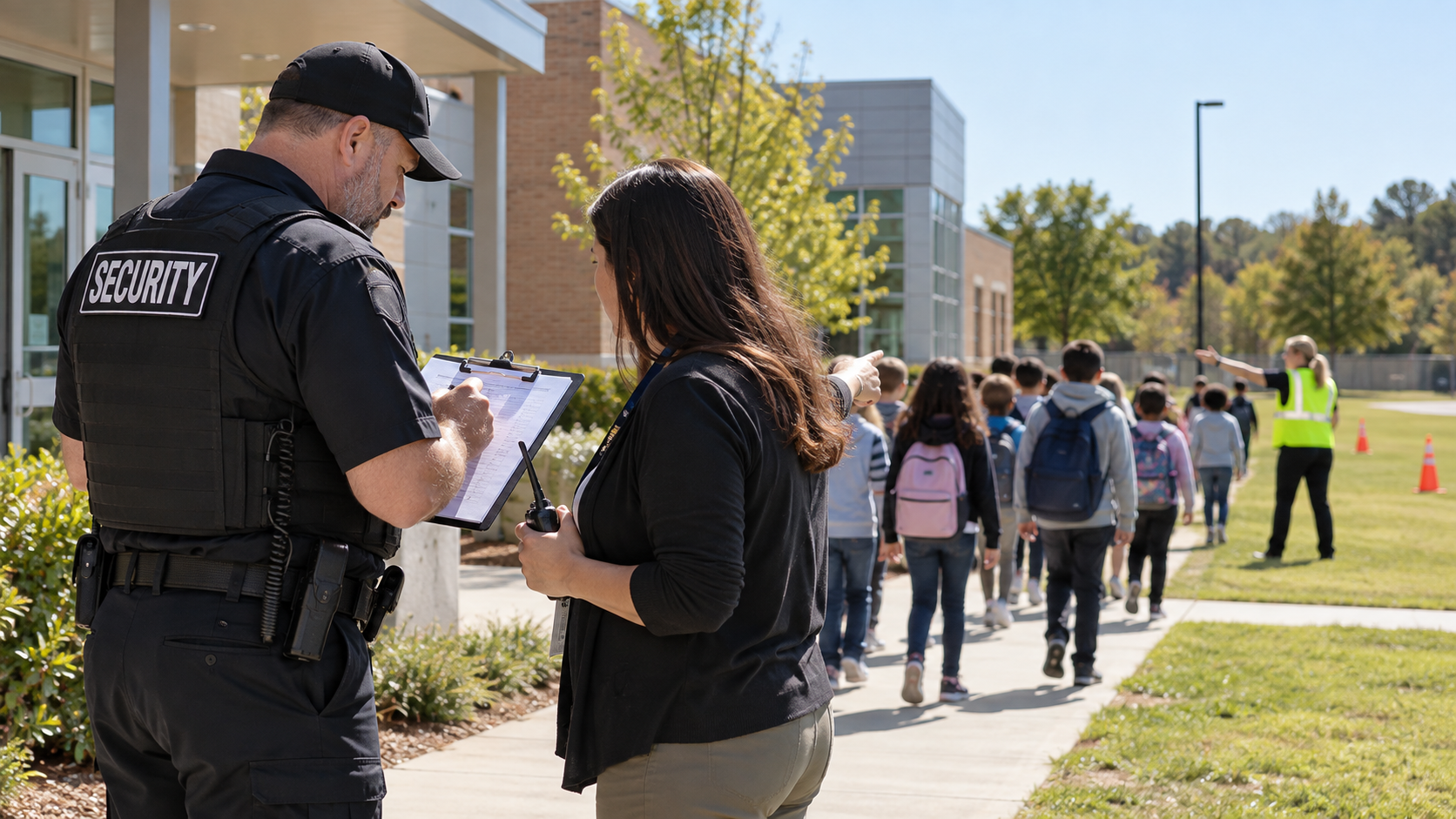
Book cover for Before the Lights Return by Matt Pasquinilli, showing a darkened school at sunset

During a school chapel service, the lights go out. The exit signs go dark. Phones and radios stop working. Outside, vehicles have stopped in the road. Nobody knows why.

That is the opening of Before the Lights Return: A Short Thriller, my fictional story about a school security director, a Christian school, and a community suddenly facing an unexplained blackout.

Explore Before the Lights Return on Amazon (affiliate link)

A crisis with no easy answers

Jack Mercer has hundreds of students and staff depending on him. His son is on campus, his wife is working at a hospital, and the usual ways of finding out what is happening are gone. The people around him must make decisions with incomplete information while trying to care for children, find loved ones, and help their neighbors.

The cause of the blackout remains uncertain. There are rumors and theories, but Jack and his colleagues have to deal with what they can see and what they can do next.

Why I wrote the story

My work in school security and my experience as a Marine veteran have taught me the value of preparation, clear thinking, and people who are willing to step forward when things get difficult. I wanted to explore those ideas through a story about ordinary people facing an extraordinary situation.

This is a thriller, but it is also a story about faith, family, friendship, and community. There are dangerous moments and hard choices, along with humor, compassion, and the hope that people can help one another when the plan meets reality.

The school, characters, and events are fictional. The book does not describe an actual school incident or predict a particular disaster.

A useful conversation to have at home

Fiction can give us a way to ask practical questions before an emergency. Do the people in your household know how to contact one another if phones are unavailable? Do you have a place to meet, a way to receive emergency information, and basic supplies for a power outage? Who nearby might need a hand?

You do not have to solve everything at once. Start with a conversation, write down the important details, and build from there.

Read Before the Lights Return

If you enjoy blackout stories, Christian fiction, and stories about courage under pressure, I hope you will take a look at Before the Lights Return.

Explore the book on Amazon (affiliate link)

As an Amazon Associate I earn from qualifying purchases.
School Radio Communication Training: A Clear-Message Practice Checklist

School radio communication training should help staff deliver a clear message, receive an acknowledgment and understand the next action. Practice with your school’s approved terminology and communication procedures before adding speed or complex scenarios.

Owning radios does not establish that everyone uses them consistently. A short practice can reveal whether staff identify the location clearly, address the right role and know what to do when a message is not acknowledged. This checklist is a suggested training aid, not a replacement for your communications plan.

Agree on the message structure

Use the format authorized by your organization. A practice prompt can ask staff to identify the intended recipient, their own role, a clear location, the relevant observation and the requested next action. Keep the order consistent with local procedures.

A fictional routine example might be: “Front office to event coordinator: practice message. The scheduled delivery is waiting at the designated receiving point. Please confirm who will meet it.” Use a training location and make the exercise status clear. Do not transmit a realistic emergency scenario over live channels without an approved exercise plan.

The clear-message checklist

  • Recipient: is it clear which person or role should respond?
  • Sender: can the recipient identify who is speaking?
  • Location: does the wording match the school’s approved location names?
  • Observation: does the message describe what is known rather than guessing?
  • Request: is the requested action understandable?
  • Acknowledgment: did the intended recipient respond using the approved method?
  • Follow-through: does someone own the next step?

A message can be brief and still leave out essential information. Evaluate clarity first. Repeating an unclear phrase more loudly will not resolve an ambiguous location or an unnamed recipient.

Run a short paired practice

Choose a routine fictional task and give one participant the sender role and another the recipient role. Have the recipient summarize what they understood and what they would do next. Compare that response with the sender’s intent.

Begin with spoken role-play if live radio traffic would disrupt operations. If radios are used, coordinate the exercise, channel and timing with the responsible team. Do not change frequencies, channels or emergency arrangements on your own.

Rotate roles so each participant practices listening as well as speaking. Ask the observer to record one clear element and one point that needs clarification. Keep feedback specific to the message rather than judging the speaker’s personality.

Practice an unclear or missed message

Ask staff to explain the approved process for requesting clarification or using an alternate contact when a call is not acknowledged. Consult the existing procedure instead of making up a backup in the moment.

Use an example with two similarly described fictional locations. Can the recipient identify which one the sender means? This can reveal naming inconsistencies without distributing actual campus response details.

Protect sensitive information

Use only information appropriate for the school’s communication system and policy. Avoid unnecessary student names, private medical details or speculative accusations in routine practice. Do not assume a radio conversation is private.

Keep actual operational issues and detailed coverage findings in the appropriate internal record. Public-facing training materials can show the learning method without exposing the school’s vulnerabilities or communication arrangements.

Close the exercise with an action

Pick one improvement that can be assigned and verified: clarify an approved location label, review a backup-contact procedure or repeat a message exercise with the relevant staff. Use the after-action review checklist to record the owner and due date.

Frequently asked questions

Should we invent new codes to shorten messages?

No. Follow your organization’s approved terminology. Unapproved codes can create different interpretations between departments or responding partners.

Can volunteers join the practice?

If leadership authorizes their role, include the communication tasks and information limits relevant to that role. Do not assume a volunteer needs every operational detail.

How often should we practice?

Set a cadence appropriate to your staffing and approved training program. Repeat after an important procedure change and verify that new staff understand the process.

Build a consistent training foundation

Browse Matt’s school security resources and the free School Security Fundamentals course. For an upcoming staff session, contact Matt with the training goal and the audience you want to prepare.

School Security Tabletop Exercise: A 30-Minute Staff Meeting Template

A school security tabletop exercise is a guided discussion of a fictional situation using your school’s approved procedures. For a short staff meeting, choose one objective, ask participants to explain their decisions and finish with assigned follow-up actions.

This 30-minute template is a suggested meeting format, not a replacement for formal emergency planning or required drills. It helps teams find unclear responsibilities before attempting a larger exercise. Ready.gov’s preparedness resources provide a broader starting point for planning and training.

Choose one objective

“Test the entire crisis plan” is too large for a brief meeting. Use a smaller objective such as confirming who receives an initial report, how a front-office question is escalated or which approved communication method staff use when the usual contact is unavailable.

Write the objective at the top of the agenda. Select the parts of your existing plan that apply and ensure participants can consult them. The meeting should reveal whether the written process is clear, not reward whoever remembers the most acronyms.

Prepare a fictional scenario

For example: a visitor arrives for an appointment that the front office cannot confirm. The usual staff contact is unavailable, and another family is waiting to be helped. Participants discuss how they follow the approved visitor process and who can resolve the uncertainty.

Use invented names and a generic setting. Avoid putting actual access details, response positions, student information or campus vulnerabilities into materials intended for broad distribution. Keep operational findings in your school’s appropriate internal system.

The 30-minute agenda

  1. Minutes 0–5: frame the discussion. State the objective, review the relevant procedure and make clear that this is a discussion exercise.
  2. Minutes 5–10: present the scenario. Ask each role what information it has and what it needs.
  3. Minutes 10–20: walk through decisions. Have participants explain their first action, handoff and backup contact using the written plan.
  4. Minutes 20–25: identify gaps. Separate unclear wording, training questions and resource issues.
  5. Minutes 25–30: assign follow-up. Choose an owner, due date and verification method for each priority action.

Do not simulate a real alarm, call emergency services as part of the discussion or surprise staff outside the meeting. Any operational drill needs its own approval, coordination and communications.

Five questions for the facilitator

  • Which part of the approved procedure applies?
  • Who owns the next decision?
  • What information does the next person need?
  • What is the approved backup if the usual person or system is unavailable?
  • How will we know that the handoff is complete?

If the answer is “someone would handle it,” ask participants to identify the role. If two departments give different answers, record the difference without improvising a new policy during the exercise.

Record actions that can be checked

“Improve communication” is too vague. “Update the approved backup-contact reference, review it with front-office staff and verify it at the next discussion” describes a concrete task. Leadership should review and authorize changes through the school’s usual process.

Use the school security after-action review checklist to turn observations into owned actions. Revisit one corrected issue in the next tabletop to check that the change is understood.

Frequently asked questions

Who should attend?

Invite the people who own the selected process and its handoffs. A visitor-management discussion may need the front office, administration and security; other topics need different roles.

Does a tabletop count as a drill?

Do not assume that it does. Treat it as discussion-based preparation and follow your organization’s requirements for operational drills.

What if we discover a serious gap?

Route it promptly to the responsible leader using the school’s approved reporting process. Do not wait for the next scheduled meeting to address an urgent concern.

Continue building staff readiness

Explore school security resources and the free School Security Fundamentals course for additional learning. For a specific training request, contact Matt with a general description of your goal; keep sensitive campus details out of an initial public form.

School Security Lessons from the Preliminary Bend Police Findings

October 17, 2026

The October 15 attack at Silver Rail Elementary School in Bend, Oregon, has left families and educators grieving. My thoughts and prayers are with the victims, their loved ones, the injured, and the entire school community. Any operational discussion must begin with respect for them.

On October 16, the Bend Police Department published a preliminary update. Police said the attacker climbed a perimeter fence and fired through glass in an exterior set of double doors before entering the building. The first 911 call was received at 12:59 p.m.; officers directed a lockdown at 1:01 p.m.; the first officers arrived at 1:02 p.m. Police emphasized that their investigation remains active. These are early incident findings, not a final after-action report.

Turn observed danger into a clear response

A perimeter breach is an observation that needs immediate interpretation and action. Staff, contractors, visitors, and nearby community members may each notice a warning sign first. The useful question for a school leader is whether a credible report reaches 911 and the people authorized to initiate protective action without being delayed by uncertainty about which office to call.

For a school with several buildings or campuses, the review should include the handoff: who receives the first report, who verifies what can be verified quickly, who calls 911, who can initiate a lockdown, and how a warning reaches people in the affected area. Teams should practice with incomplete information rather than assuming every first report will be precise.

The Bend timeline does not by itself establish that any decision was late or early. It does show how compressed a real event can be. A drill can test whether notification methods and responsibilities are understood before an emergency forces those decisions.

Assess the entry as a system

A locked exterior door is one part of an entry system. Glazing, door hardware, frames, adjacent occupied spaces, visibility, and the time needed to recognize and report an attempted breach all affect the outcome. The police account describes one method used at one school; it does not prove that the same method would work at another facility.

School leaders can ask qualified security and facilities professionals to review exterior entries for forced-entry delay and life-safety compliance. The aim is to understand how a particular opening performs, what occupants can do if it is challenged, and which improvements are practical. Any proposed modification should be checked against fire egress, accessibility, and local code requirements. Avoid publishing the findings of a site-specific assessment.

Practice the decision chain across campuses

Multi-campus organizations need consistent language and clear roles, while allowing each building to act on the threat in front of it. A short tabletop can begin with a witness reporting someone climbing a fence and then test the next few minutes: dispatch, protective action, communications to other buildings, responder arrival, and accountability.

Include local law enforcement and fire partners when appropriate. Give staff a way to raise uncertainty during the exercise. Afterward, assign owners and dates to any changes in notification, training, or physical security, then verify that the changes work in a subsequent drill.

Three steps for school leaders now

  1. Review the first report. Check how a credible observed breach moves to 911 and to an authorized protective action, including after-hours activities.
  2. Review exterior openings. Have qualified people assess doors, glazing, frames, and nearby occupied areas without compromising egress or disclosing vulnerabilities publicly.
  3. Run a focused tabletop. Test communication and roles across buildings and with responders, then document a small number of changes to complete.

The Bend Police release is a source of preliminary facts, not a new national standard, a legal requirement for Florida schools, or a threat advisory about any other campus. Further investigative findings may change the timeline or the lessons drawn from it. School security teams can act responsibly now by testing their own processes and revisiting the exercise when fuller official findings are available.

Source: Bend Police Department, “UPDATE: Active Shooter Incident at Silver Rail Elementary School,” October 16, 2026 (incident October 15, 2026).

School Event Security Checklist for Games, Concerts and Parent Nights

By Matt Pasquinilli — Head of Security at Jupiter Christian School and self-defense instructor with more than 30 years of teaching experience.

A school event security checklist should address what changes when the regular school day ends: the people attending, the areas in use, available staff, communication and the return to normal campus operations. A football game, concert or parent information night deserves its own review even when it takes place in a familiar building.

Use the framework below for an authorized planning discussion. Adapt it to your school’s emergency procedures and coordinate with appropriate local partners. Keep detailed staffing, protective arrangements and response information in controlled staff documents.

Start with five planning questions

  1. Who is responsible for the event and who makes operational decisions?
  2. Which spaces are needed, and which remain outside the event area?
  3. How will visitors receive clear arrival and assistance instructions?
  4. How will staff communicate and use approved emergency procedures?
  5. Who confirms that the campus is ready for its next use?

Do not assume the daytime office team or normal dismissal staff will be present. Assign responsibilities by role and identify a backup for each essential task.

Before the event: walk the visitor experience

Review the route an invited guest will actually use, including parking, pedestrian movement and the designated entrance. Look for confusing signs, poorly communicated instructions and places where a visitor would need assistance.

Include accessibility and weather in the discussion. Establish how event leaders will receive weather information and communicate decisions under the school’s approved plan. Verify that event setup preserves required exits and emergency access; involve the appropriate facilities or safety authority when needed.

School event security checklist

  • Leadership: Event owner, decision-maker and backups are identified.
  • Attendance: Expected audience, vendors, volunteers and student groups are understood.
  • Access: Public arrival instructions and any check-in requirements are clear.
  • Staff preparation: Assigned personnel know their duties and how to request help.
  • Communication: The approved communication method is checked before guests arrive.
  • Emergency readiness: Staff know how to activate medical and other approved emergency procedures.
  • Facilities: Occupancy, accessible routes, exits and event setup are reviewed by appropriate staff.
  • Student accountability: Supervising staff know their group’s attendance and release procedures.
  • Departure: The event has a plan for orderly dismissal and guests needing assistance.
  • Closeout: An assigned person completes the post-event facilities and security checks.

Adjust the plan to the type of gathering

Athletic events: Consider simultaneous activity around spectator areas, concessions and team movement. Clarify which personnel manage the event and how they request medical or other assistance.

Concerts and performances: Review backstage supervision, student release and how announcements will reach guests. Check that temporary equipment and seating support the approved use of the space.

Parent nights: Guests may move between rooms rather than remaining in one venue. Provide understandable directions and define how staff assist visitors who become separated from their group or need another destination.

Use a short pre-event briefing

Give staff one clear briefing covering responsibilities, the communication method, assistance requests and approved emergency actions. Ask each role to explain its next step in a fictional scenario: a guest needs urgent medical help, a student cannot find a parent, or weather changes the departure plan.

Keep the scenario discussion focused on decisions and coordination. Do not stage an unannounced crisis or publish sensitive response details to promote the event.

Close the event with a review

Record what worked, what was confusing and which issue needs correction before the next gathering. Assign each corrective action an owner, a deadline and a way to verify completion. Store sensitive findings in the school’s approved internal system.

My School Security & Preparedness Resources includes further reading on daily readiness and after-action review.

Common planning questions

Can we reuse the school-day plan unchanged?

Use its approved procedures as the foundation, then review differences in staffing, attendance, space use and communication for this event.

Does this checklist determine how many guards we need?

No. Staffing decisions require a site- and event-specific assessment with leadership and appropriate partners. A generic blog checklist cannot set that number.

Prepare your team with free training

Explore the free School Security Fundamentals course for staff learning and discussion. For official reference materials, visit CISA’s physical-security and K–12 training resources.

This article supports planning and staff education; your organization’s approved procedures and local requirements govern the event.

School Visitor Management Checklist: A Clear Process for Front-Office Teams

By Matt Pasquinilli — Head of Security at Jupiter Christian School and a practical self-defense instructor with more than 30 years of teaching experience.

A useful school visitor management checklist follows the entire visit: arrival, identity and purpose, authorization, permitted destination, staff handoff and departure. A badge or sign-in record supports that process, but it does not replace a clear decision about who may enter and why.

The checklist below is a planning tool for school leaders and front-office teams. Adapt it to your approved procedures, accessibility needs and local requirements. It is not a description of any particular school’s security arrangements.

Before arrival: make the instructions clear

Give visitors straightforward public directions to the designated check-in location and tell them what the school requires for a visit. An appointment, delivery or contractor assignment should have a staff contact who can confirm the purpose and the permitted work or visit area.

Keep sensitive response arrangements and internal security details out of public instructions. Families need to know how to arrive and ask for assistance, not how your protective systems are configured.

At check-in: separate identity from permission

Knowing a person’s name is different from knowing whether that person is authorized for this visit. Use your school’s approved identity-verification process, confirm the reason for the visit and check with the responsible staff member before granting access.

A parent, vendor or familiar volunteer may have a legitimate reason to be present while still needing to follow the same check-in process. Staff should have a respectful way to handle a missing appointment, unavailable host or other exception without improvising access.

Visitor-management checklist

  • Arrival: Visitor uses the designated check-in process; staff know where to direct someone who arrives elsewhere.
  • Identity: Required verification is completed under school policy.
  • Purpose: The visit, appointment or delivery is confirmed with an appropriate staff contact.
  • Authorization: Staff know who may approve access and who handles an exception.
  • Destination: The permitted area and any escort requirement are clear.
  • Identification: Any required visitor badge is issued according to the school procedure.
  • Handoff: The receiving employee understands responsibility for the visitor.
  • Departure: Checkout and badge return are completed as required.
  • Record: Information is retained and accessible only as permitted by school policy.

Practice a polite exception before it happens

Use a fictional scenario during a staff meeting: a contractor arrives without the expected staff contact available. Ask the office team to explain the next step, identify the decision-maker and describe how the visitor will be kept informed.

A simple practice phrase is: “Welcome. Let me confirm your visit with our office before we direct you inside.” If confirmation is unavailable, staff should follow the approved waiting or rescheduling procedure. Courtesy and a consistent process can work together.

Review the staff handoff

The visit does not end when the office prints a badge. Ask who receives the visitor, what happens if the destination changes and how departure is recorded. A checklist becomes more useful when each step has an owner.

For multiple campuses, use the same core language while documenting necessary site-specific differences. Test whether a substitute receptionist or temporary employee can explain the process from the written instructions.

Common visitor-management questions

Does visitor-management software replace staff training?

No. Staff still need to understand authorization, exceptions, handoffs and escalation. A software record helps document the process; it does not make every access decision.

Should this checklist be posted publicly?

Publish clear arrival and check-in instructions. Keep internal decision paths, sensitive contacts and protective arrangements in appropriate staff materials.

How should we evaluate the process?

Use a planned walkthrough with leadership approval. Observe whether staff can follow the approved steps, then assign and verify any corrective actions.

Build staff understanding with free training

Explore my free School Security Fundamentals course and choose a lesson for your next staff discussion. Check the course page for current curriculum and enrollment details.

Find more operational guidance in my School Security & Preparedness Resources. For official resources, review CISA’s physical-security resources and K–12 School Security Guide training materials.

Free School Security Course: Curb to Classroom Fundamentals

Illustration of a school security officer and staff member coordinating a drill

Free training for the people who help keep schools safe. Enroll in Gold Standard School Security: Curb to Classroom Fundamentals, my free online course for school security personnel, safety coordinators, and school leaders.

School security depends on the work people do every day: preparing for a shift, communicating a concern, applying visitor procedures consistently, and making sure an unresolved issue gets attention. I created this course to give school teams a practical starting point for those conversations.

Enroll in the free school security course →

Practical reading lessons. Free enrollment.

The course includes reading lessons, realistic fictional scenarios, practice activities, self-checks and copyable field tools. Work through it at your own pace in Thinkific. The enrollment page provides the current curriculum; arrange any actual campus walkthrough separately with your supervisor.

  • Daily readiness: understand your assignment, prepare for the shift, and follow through.
  • Curb to Classroom observations: notice conditions that need attention and report them clearly.
  • Visitors and deliveries: apply respectful, consistent boundaries.
  • Concerning behavior: record facts and use the appropriate reporting process.
  • Emergency coordination: communicate clearly and support accountability within your assigned role.
  • Drills and improvement: turn practice into a useful 30-day action plan.
  • Calm communication: practice de-escalation and know when to request help.
  • Arrival and dismissal: support approved traffic, supervision, and student-release procedures.
  • School events: prepare for games, performances, meetings, and after-school activities.
  • Shift handoffs: give open issues an owner and verify follow-through.
  • CPTED: examine visibility, access routes, boundaries, maintenance, and supervised use of spaces.

The remaining lessons provide copyable field tools, a knowledge review, and further-learning references. Enrollment is free with unlimited access. No course purchase is required.

School security continues after the school day

Evening concerts, sporting events, and parent information nights can change how a campus operates. The event-readiness lesson addresses staffing, communication, emergency arrangements, accessibility, and student accountability. Its concert scenario gives teams a practical discussion starter.

The dedicated CPTED lesson includes a parent-night scenario and a “Curb to Classroom” observation checklist. Learners also receive an improvement record for documenting a concern, assigning responsibility, and checking the result.

Use it with your team

Complete a lesson, discuss its scenario, and ask how it relates to your school’s current procedures. Choose one practical improvement to bring to your supervisor. Build toward a three-item improvement plan with clear responsibilities and follow-up dates.

Use fictional examples in course discussions. Keep student information, detailed security arrangements, and actual campus vulnerabilities in your school’s approved channels.

Who this course is for

This introductory course is designed for school security officers, guards, safety coordinators, and school leaders. It is a text-and-activities course, with no video lessons or certificate currently included. It does not replace employer training, local procedures, required qualifications, or a professional site assessment. No licensing, accredited training credit, or government endorsement is claimed.

I’m Matt Pasquinilli, a school security professional and practical self-defense instructor with more than 30 years of teaching experience. My Gold Standard School Security work focuses on daily readiness, clear communication, and practical improvements from curb to classroom.

Start learning today

Explore the free school security course →

Know a school security professional or administrator who could use this resource? Share this page with them.