Joining a church security team is an opportunity to serve. People come to church carrying grief, worry, excitement, and questions. They should find a welcoming congregation and volunteers who are attentive, prepared, and kind.
My work in security has reinforced a simple lesson: dependable daily habits matter. If you are new to a church security ministry, start with these ten habits and practice them with your team leader.
1. Put service before ego
Your assignment is to help people worship safely. Introduce yourself, give directions, and offer assistance. A friendly greeting can help someone feel welcome while giving you a chance to notice whether they need help. Be approachable. Your conduct represents both the security ministry and the church.
2. Know your assignment and your limits
Before serving, ask who leads the shift, where you are assigned, and how to request assistance. Read the church’s written procedures. Know which decisions belong to ministry leadership or emergency responders. Stay within your approved role and training. When you need relief, arrange coverage instead of leaving a gap.
3. Walk the campus before you need the plan
Learn the building names, entrances, exits, meeting areas, and routes used by children’s ministries. Find the designated shelter and reunification locations. Ask how people with mobility or communication needs will receive assistance. Walk the routes with an experienced member; reading a floor plan alone does not build familiarity.
4. Arrive early and check your equipment
Allow time for the briefing, radio check, and a walk through your assigned area. Ask about special events or changes to the normal service. Report blocked exits, malfunctioning doors, or other hazards through the church’s maintenance process. Keep your personal phone put away while on assignment unless it is needed for your duties.
5. Describe behavior instead of labeling people
Pay attention to observable actions and context. A person making a specific threat requires a different response from a visitor who seems unfamiliar or uncomfortable. Report what you actually saw or heard. Race, appearance, disability, or religious background alone does not establish a threat. Avoid treating an assumption as a fact.
6. Make your radio message useful
Use the church’s agreed terminology. Give your location, a brief description of the situation, and the help needed. For example: “East lobby. A visitor needs assistance finding the children’s check-in desk.” Practice routine messages before an emergency. For immediate danger, call 911 as soon as safely possible; do not let an internal approval chain delay emergency help.
7. Practice calm communication and safe disengagement
Speak respectfully, listen, and give people room. Avoid arguments, public embarrassment, or crowding an upset person. Follow your training and involve the team leader early. If violence is imminent or occurring, prioritize safety and emergency notification. De-escalation is a useful skill, but a new volunteer should never feel obligated to handle a dangerous encounter alone.
8. Respect children’s ministry procedures
Learn the approved check-in, pickup, and concern-reporting process before your first assignment. Refer exceptions and disputed pickups to the designated leader. Familiarity with a family does not replace the release procedure. Keep information about children and families confidential, and follow the church’s safeguarding rules consistently.
9. Build medical readiness through training
Find the first-aid supplies and AED, and know how to summon the medical team and direct responders to the correct entrance. Ask about qualified CPR, AED, first-aid, and bleeding-control instruction. Training gives a volunteer useful skills and a clearer understanding of their limits. Keep equipment checks and refresher training on the team calendar.
10. Finish with facts and one improvement
Use the approved incident-report process when something needs documentation. Record observations, times, notifications, and actions without speculation. Share sensitive information only with authorized people. After a drill or incident, ask what worked and what should change. Assign an owner to the improvement so the discussion becomes action.
First-service checklist for a new church security volunteer
Use this short checklist with your team leader before taking an assignment. Keep private contact information and operational details in the church’s approved records.
- Confirm your assignment, shift leader and relief arrangements.
- Check your radio and practice one routine message.
- Know how to request medical help and notify emergency responders.
- Review the children’s check-in and release procedure for your role.
- Find the approved reporting process and arrange a short debrief.
What should a new church security team member learn first?
Begin with responsibilities, communication and the church’s written procedures. Walk your assigned area with an experienced volunteer and ask how to get help. Choose one habit from this guide to practice during the next briefing.
How can a church team continue training?
Use a short discussion, a clearly assigned action and a follow-up date. Review the organization preparedness checklist for planning around outages. Teams supporting a church school can also use the school security training resources and school tabletop exercise template, adapted through their own leadership.
For more reading, browse Matt Pasquinilli’s security and preparedness books.
Build a prepared, welcoming church security ministry
Choose one tip to discuss at your next briefing. Practice it, identify a gap, and correct it together.
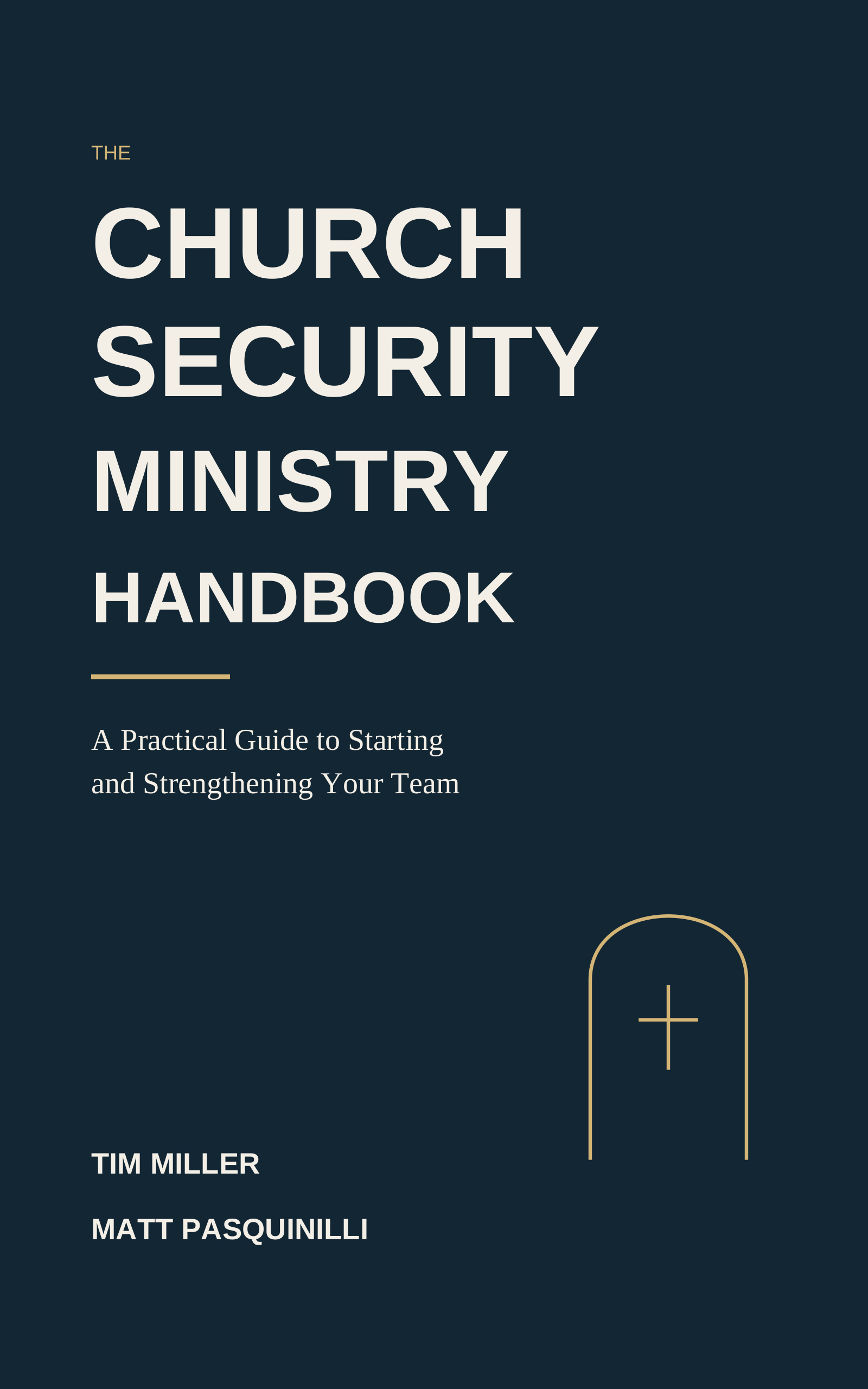
For a practical framework, Tim Miller and I wrote The Church Security Ministry Handbook. The Thinkific download includes the complete handbook in PDF and EPUB plus a printable toolkit with forms and tabletop exercises to help your team turn preparation into consistent practice.
Get the church security ebook and toolkit on Thinkific.
Further team-training resources: CISA’s Mitigating Attacks on Houses of Worship Security Guide, Perimeter Security Considerations, and De-escalation Action Guide. Apply these tips through your church’s approved procedures and qualified training.
