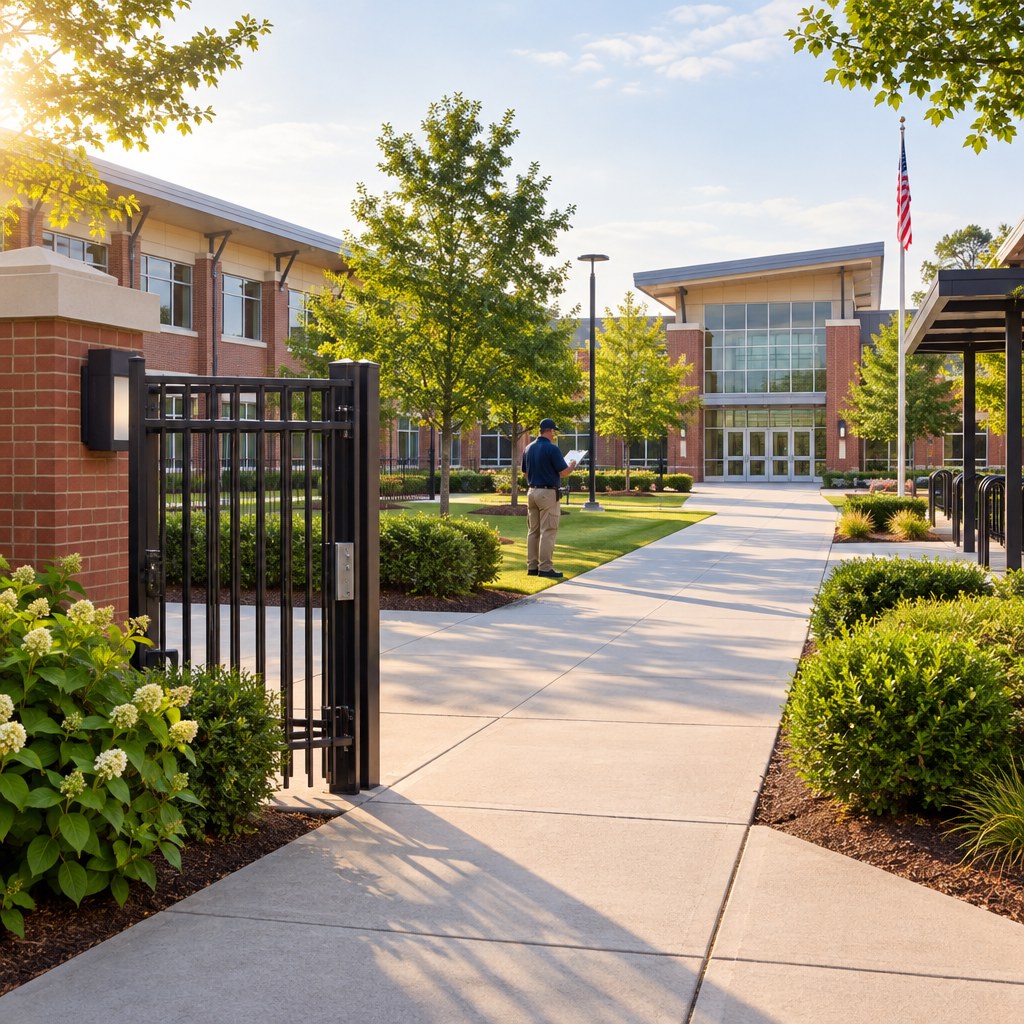
Some of the most important contributions to school security happen long before a security officer responds to a concern. They happen every day, through the consistent work of people who take pride in the condition of the campus.
At one of our campuses, I have the privilege of working alongside an exceptional Director of Facilities. His work is visible everywhere: the campus is clean, attractive, orderly, and fully functional for the students and teachers who depend on it. But what stands out most is not simply the finished appearance. It is the fastidious attention to detail, the conscientious work ethic, and the steady follow-through behind it.
As the Director of Security, that makes my job easier in ways that are sometimes overlooked. His work supports one of the foundational ideas in school safety: Crime Prevention Through Environmental Design (CPTED).
Why a well-maintained campus is a security asset
CPTED is the practice of using the design, use, and ongoing care of the built environment to reduce opportunities for crime and help people feel safe. It is not a substitute for sound security procedures, trained people, or strong relationships with law enforcement. It is one important layer that makes the entire environment work better.
1. Natural surveillance: visibility matters
Well-kept landscaping, clear walkways, working exterior lighting, and uncluttered common areas help preserve sightlines. When shrubs, stored equipment, or neglected areas obstruct views, they can create hiding places and blind spots. A facilities team that notices and corrects those details helps staff, visitors, and security personnel see what is happening around them.
2. Access control: the environment should guide movement
Doors, gates, locks, closers, fencing, signs, and visitor routes all have to work as intended. A beautiful campus is not secure if a gate does not latch, a door is unreliable, or an access point is confusing. Consistent inspection and prompt repair help keep people moving through the entrances and routes the school intends them to use.
3. Territorial reinforcement: care communicates ownership
A campus that is orderly, clean, and cared for sends a quiet but powerful message: this place is valued, monitored, and used by a community that takes responsibility for it. Clear boundaries, well-maintained signs, defined entrances, and attractive shared spaces help students, staff, families, and visitors understand where they belong and where they should go.
4. Maintenance: the principle that keeps the others working
Maintenance is not merely cosmetic. Broken lights, damaged fencing, malfunctioning locks, overflowing waste areas, and neglected landscaping can undermine visibility, access control, and the sense of ownership. Ongoing care prevents small defects from becoming persistent vulnerabilities. The standard has to be maintained every day, not just before an event or inspection.
Security is a team effort
Security directors can write policies, conduct assessments, coordinate drills, train personnel, and identify vulnerabilities. But we rely on facilities professionals to turn many of those recommendations into a dependable physical environment. A repaired latch, a clear sightline, a properly maintained gate, or a promptly addressed maintenance issue can make a practical difference to the people protecting and using the campus.
That is why I want to recognize our Director of Facilities. His work product is excellent, but the value goes beyond appearance. His consistency, attention to detail, and personal standards strengthen the campus environment and support the safety mission every day.
To every facilities director, custodian, maintenance technician, and grounds professional serving a school: your work matters to school security. You are not simply keeping a building clean or making a campus look good. You are helping create an environment that is visible, orderly, functional, welcoming, and harder to misuse.
School safety is not one department’s responsibility. It is a shared commitment—and sometimes one of its strongest layers is the person who notices the small things and takes the time to make them right.
Continue with a practical learning step
For an organized starting point, explore Matt’s free School Security Fundamentals course. Review the curriculum and enrollment details, then choose one topic to discuss with your facilities and security teams. Online training supports your organization’s approved procedures; it does not replace a site-specific assessment.
#SchoolSecurity #CPTED #SchoolSafety #FacilitiesManagement #CampusSafety #CrimePrevention
